Why Choose 9mm Stainless Steel Tube for Global Sourcing?

Time:2026-09-18 Author:Liam
0%

Why Choose 9mm Stainless Steel Tube for Global Sourcing? The answer begins with precision, not price. In international purchasing, “9mm” may describe the outside diameter, but it does not define wall thickness, grade, finish, or tolerance. A reliable sourcing decision must clarify every measurement before requesting quotations.

John C. Lippold, a respected stainless-steel welding expert and professor emeritus at The Ohio State University, has stated, “Stainless steels are not a single alloy, but a family of alloys with a wide range of properties.” That distinction matters. A 9mm Stainless Steel Tube made from 304 may suit general fabrication, while 316 can offer stronger resistance in chloride-rich environments. The correct choice depends on service conditions, forming requirements, welding methods, and inspection expectations.

Global buyers also need traceable mill certificates, consistent batch quality, and documentation aligned with relevant standards, such as ASTM A269 or ASTM A554 when applicable. Surface finish deserves attention too. A bright polished tube can look excellent in a sample, yet production batches may reveal scratches, uneven coloration, or dimensional variation.

Small details create large costs.

A practical supplier should confirm chemical composition, tensile properties, outer diameter, wall thickness, ovality, straightness, packaging, and export experience. Independent inspection can add confidence, although it cannot replace clear specifications. There is no universal “best” tube. That assumption is worth challenging. The best 9mm Stainless Steel Tube is the one that matches the application, survives transport, and performs consistently after arrival.
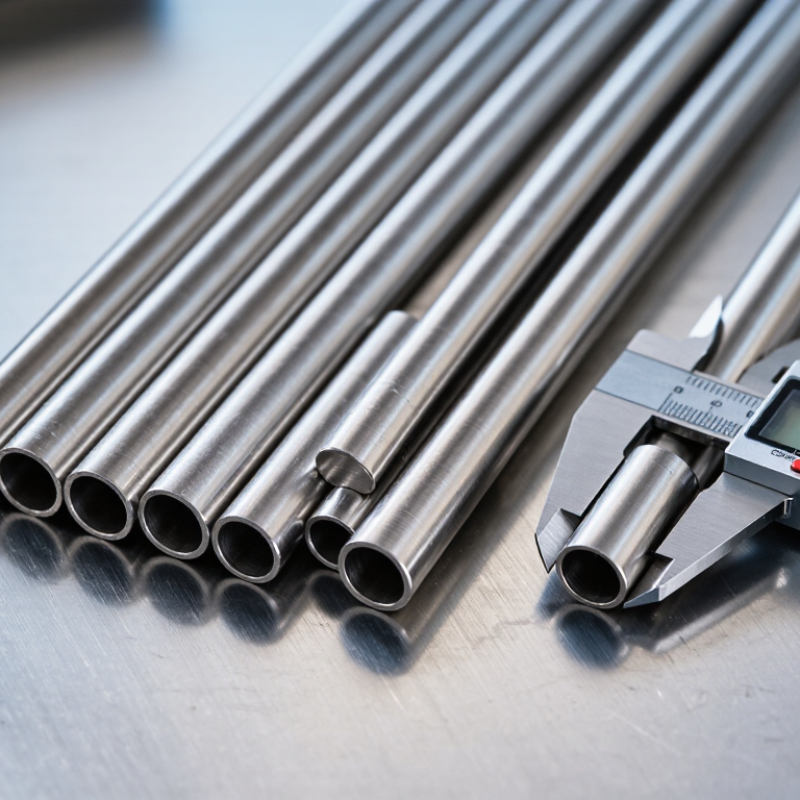
Why Choose 9mm Stainless Steel Tube for Global Sourcing?

What Is a 9mm Stainless Steel Tube?

A 9mm stainless steel tube is a narrow hollow product with an outside diameter of about 9 millimeters. In metric sourcing, “9mm” usually describes the outer diameter, not the inner opening. That distinction matters. A 0.8mm wall leaves roughly 7.4mm inside diameter, before tolerance is considered. The tube may be welded or seamless. Welded tubing suits many structural and fluid-handling uses, while seamless tubing is often selected for higher pressure or demanding forming. The right choice depends on service conditions, not diameter alone.

Common stainless options include austenitic grades with good corrosion resistance and easy fabrication. A polished surface can support clean equipment, while a mill finish may be practical for frames, heat exchangers, and compact assemblies. During inspection, buyers should check outside diameter, wall thickness, straightness, surface marks, and cut length. Certificates should identify the material grade and test results. Small tubes expose mistakes quickly. A slight oval shape can affect fittings and flow.

For global sourcing, request a drawing with tolerances, length range, edge condition, and packaging requirements. Confirm whether the tube must pass pressure, leakage, hardness, or chemical tests. Packaging also matters; loose ends can be scratched during a long shipment. I have found that “stainless” alone is too vague for a reliable purchase. It sounds clear, but it is not. A sample inspection can reveal fit problems, uneven polishing, or an unmeasured wall thickness.

Key Material Properties and Performance Benefits

Why Choose 9mm Stainless Steel Tube for Global Sourcing?

Key Material Properties and Performance Benefits

For global sourcing, 9mm stainless steel tube offers a practical balance of strength, weight, and installation space. Its compact diameter suits fluid lines, instrument assemblies, heat exchangers, and protective frameworks. Stainless steel forms a passive chromium-rich film that helps resist moisture and many common chemicals. This protection is not unlimited. Chlorides, poor cleaning, or surface contamination can still cause staining and localized corrosion.

Material grade matters greatly. Austenitic grades such as 304 provide dependable corrosion resistance and fabrication performance. Grades with higher molybdenum content can perform better in chloride-rich environments. The correct choice depends on temperature, media, pressure, and exposure time. A tube that looks identical may behave very differently in service. That detail is easy to overlook.

Mechanical performance also supports reliable operation. A properly specified 9mm tube can tolerate vibration, moderate pressure, and repeated handling without excessive deformation. Its smooth bore may reduce residue buildup and simplify cleaning. Welded assemblies require careful heat control, because overheating can affect appearance and corrosion resistance. For purchasing teams, request grade certificates, dimensional tolerances, surface-finish details, and applicable ASTM, EN, or ISO requirements. Measure the outside diameter and wall thickness on received samples. A 9mm specification may describe the outside diameter, inside diameter, or another nominal dimension. That assumption can fail. Small checks prevent expensive misunderstandings.

Manufacturing Processes and Quality Standards

Why Choose 9mm Stainless Steel Tube for Global Sourcing?

Manufacturing Processes and Quality Standards

A 9mm stainless steel tube can suit instrumentation, heat exchangers, medical equipment, and compact fluid systems. However, “9mm” must be defined clearly. It may describe outside diameter, inside diameter, or nominal size.

Production usually begins with high-quality stainless strip or hollow billet. Welding, cold drawing, or seamless forming creates the tube body. Cold drawing improves dimensional accuracy and surface finish. Intermediate annealing reduces hardness and relieves forming stress. Straightening and precision cutting then prepare the tubes for shipment.

Quality control should follow the application and agreed specification. Common references include ASTM A269, ASTM A213, EN 10216, and EN 10217, but no single standard fits every project. Inspectors may verify chemical composition through material testing and confirm diameter, wall thickness, hardness, tensile strength, and surface condition. Eddy-current or hydrostatic testing can reveal discontinuities that visual checks miss. Each production lot should include heat numbers, inspection records, and traceable certificates.

In practical sourcing, sample approval matters. A tube can meet chemistry requirements yet fail during bending because of inconsistent wall thickness. This is an easy detail to overlook. Buyers should request dimensional reports, test methods, packaging photographs, and clear tolerance limits before mass production. Stainless steel is corrosion resistant, not corrosion proof. Cleaning, storage, and the service environment still influence long-term performance.

Why Choose 9mm Stainless Steel Tube for Global Sourcing? - Manufacturing Processes and Quality Standards
Data Dimension Reference or Typical Value Manufacturing and Quality Relevance Recommended Verification Documents
Nominal Outside Diameter 9.00 mm A compact outside diameter suitable for instrumentation, heat-transfer, pneumatic, hydraulic, and general fluid-handling applications where space is limited. Dimensional inspection report, calibrated micrometer records, and applicable product standard.
Common Wall-Thickness Range Approximately 0.50–1.00 mm for light and medium-duty tubing; project specifications may require other values. Wall thickness affects pressure capability, weight, bendability, flow area, and corrosion allowance. The final value must be selected from the design pressure and applicable code. Purchase specification, wall-thickness map, ultrasonic or mechanical measurement records.
Typical Stainless-Steel Grades 304/304L and 316/316L austenitic stainless steel 304/304L is widely used for general corrosion resistance. 316/316L provides improved resistance to chloride-containing environments because of its molybdenum content. Heat-number traceability, material test certificate, and chemical composition report.
Primary Manufacturing Process Cold-formed longitudinal welded tube or seamless cold-drawn tube Welded tube is often cost-effective for consistent thin-wall production. Seamless tube eliminates a longitudinal weld but may involve higher material and processing costs. Process route declaration, weld procedure information where applicable, and production inspection plan.
Welded-Tube Process Sequence Strip slitting → roll forming → longitudinal welding → bead conditioning → sizing → solution annealing or specified heat treatment → straightening → cutting Controlled forming and weld conditioning help maintain roundness, surface quality, and dimensional consistency at the 9 mm outside diameter. Process flow chart, heat-treatment records, weld inspection results, and dimensional inspection report.
Seamless-Tube Process Sequence Tube piercing or extrusion → cold drawing or pilgering → intermediate annealing as required → sizing → final heat treatment → straightening and cutting Cold drawing can improve dimensional accuracy and surface finish while achieving the specified outside diameter and wall thickness. Manufacturing route, reduction schedule, annealing records, and final inspection report.
Relevant ASTM Standard ASTM A269/A269M for seamless and welded austenitic stainless-steel tubing for general service Defines requirements commonly covering dimensions, materials, mechanical properties, heat treatment, and tests for general-service tubing. Certificate of conformity to the purchased ASTM edition and test results required by the order.
Heat-Exchanger Applications ASTM A249/A249M may apply to welded austenitic stainless-steel tubes for boilers, heat exchangers, condensers, and similar equipment. The applicable standard depends on the service and equipment design. A 9 mm tube must also satisfy the purchaser’s pressure, temperature, and dimensional requirements. Applicable standard edition, pressure-test records, and heat-treatment documentation.
European Dimensional Reference EN 10217-7 for welded stainless-steel tubes for pressure purposes; ISO 1127 may be used as a dimensional reference where specified. European projects may require EN-based material, tolerance, testing, and acceptance requirements rather than ASTM requirements. Declaration of conformity, inspection certificate, dimensional tolerance report, and test plan.
Chemical Composition Control Grade-specific limits for elements such as chromium, nickel, carbon, and molybdenum Low-carbon grades such as 304L and 316L reduce the risk of sensitization after welding when correctly processed, but grade selection must match the application. Heat analysis and product analysis from a material test certificate; positive material identification when required.
Mechanical Properties Typical austenitic stainless-steel tubing requirements include tensile strength, yield strength, and elongation specified by the selected standard and grade. Mechanical values vary with grade, product form, heat treatment, and standard. They should not be substituted with generic values during design approval. Tensile-test report, yield-strength result, elongation result, and applicable standard reference.
Surface Finish Common finishes include bright annealed, polished, pickled, or mill finish; roughness requirements should be stated numerically when critical. Surface condition influences cleanability, corrosion performance, friction, appearance, and suitability for sanitary or instrumentation service. Surface-finish specification, roughness measurements, visual inspection report, and sample approval.
Dimensional Tolerances Outside-diameter, wall-thickness, ovality, straightness, and length tolerances depend on the selected standard and purchase specification. For a 9 mm tube, small deviations can materially affect assembly fit and flow performance, so tolerances should be agreed before production. Approved drawing, inspection standard, calibration certificates, and sampling plan.
Weld Integrity Testing Testing may include eddy-current, hydrostatic, pneumatic, or other methods required by the applicable standard and service. Non-destructive testing helps identify weld discontinuities, while pressure testing verifies leak tightness when required. Non-destructive examination report, pressure-test certificate, and acceptance criteria.
Corrosion-Resistance Verification Intergranular-corrosion testing may be required for certain grades, heat treatments, or applications. Testing should be selected according to the material standard, fabrication route, chemical environment, and customer specification. Corrosion-test report, heat-treatment record, and material traceability documentation.
Traceability Heat number, tube lot, production date, and inspection status Full traceability links the finished 9 mm tubes to the original stainless-steel heat and quality records, supporting audits and claims management. Heat-number marking, packing list, material certificate, and batch inspection report.
Global Sourcing Advantage Standardized specifications and measurable acceptance criteria Using the exact diameter, wall thickness, grade, standard, tolerance, finish, testing, packaging, and documentation requirements reduces ambiguity between international suppliers. Detailed purchase specification, approved sample, inspection and test plan, and pre-shipment inspection report.
Packaging Requirements Protective caps, moisture-resistant wrapping, separators, and rigid export packaging as appropriate Proper packaging helps prevent dents, scratches, contamination, and moisture-related staining during international transport and storage. Packing specification, photographs before shipment, packing list, and shipping inspection record.
Important Engineering Note A 9 mm outside diameter alone does not define suitability. Final selection must consider internal diameter, wall thickness, pressure and temperature, fluid compatibility, joining method, bending radius, cleanliness, and the governing design code. Approved technical drawing, application specification, and signed quality agreement.

Common Applications Across Global Industries

A 9mm stainless steel tube fits systems where space, cleanliness, and corrosion resistance matter. In food-processing lines, it can carry water, air, or liquid ingredients around compact frames. Smooth internal surfaces help reduce residue, but finishing quality still matters. A rough weld can trap moisture. Engineers should confirm outside diameter, wall thickness, alloy grade, and surface finish before ordering. Small diameter. Tight spaces. Dimensions must still match fittings, clamps, and pressure requirements.

Medical and laboratory equipment may use this tube for gas lines, sensor housings, and support assemblies. These applications demand controlled cleanliness and reliable documentation. Industrial automation also uses compact stainless tubing near actuators, conveyors, and inspection equipment. In vehicle manufacturing, it may support fluid routing or protective structures, depending on design specifications. Construction projects use it for railings, frames, and interior fittings where appearance and corrosion resistance are important. Each application needs different mechanical and surface requirements.

Global sourcing adds practical concerns. A lower quotation can appear attractive, but inconsistent wall thickness may create installation problems. Procurement teams should request dimensional reports, material certificates, weld information, and suitable corrosion test data. Packaging deserves attention too. Scratched surfaces can become a problem after long sea transport. Not every 9mm tube suits every market. That distinction is easy to miss. Local standards, inspection rules, and end-use conditions should be checked before production. A tube may look identical on paper, yet perform differently in humid coastal air, sterile rooms, or high-temperature equipment.

Global Sourcing, Cost, and Supplier Considerations

Why Choose 9mm Stainless Steel Tube for Global Sourcing?

Global Sourcing, Cost, and Supplier Considerations

A 9mm stainless steel tube can suit compact frames, fluid lines, and precision assemblies. Its small diameter saves space and may reduce material usage. However, “9mm” usually describes the outside diameter, not the wall thickness. Confirm both dimensions before requesting quotations. Small details matter. A 0.5mm wall and a 1mm wall can change weight, strength, and forming performance.

Global sourcing requires more than comparing unit prices. Ask suppliers for the stainless steel grade, dimensional tolerances, surface finish, and production capacity. Grades such as 304 and 316 perform differently in humid or chemically exposed environments. Mill certificates and sample inspection improve traceability. They also reveal whether the supplied material matches the purchase specification. Samples help, but they do not replace batch inspection.

The lowest quotation may not produce the lowest landed cost. Calculate tooling, packaging, freight, customs handling, inspection, and possible rework. A supplier with a slightly higher price may offer steadier tolerances and shorter lead times. That assumption fails sometimes. Check minimum order quantities and payment terms carefully. Request clear delivery schedules, export packaging details, and photos of tube protection before shipment. One overlooked issue is internal cleanliness, especially when the tube enters a controlled assembly. Supplier reliability must be measured through records, not promises.

Why Choose 9mm Stainless Steel Tube for Global Sourcing?

Material efficiency, dimensional control, and supplier comparability are key considerations when sourcing compact stainless steel tubing internationally.

The chart shows the calculated mass per metre for a 9mm outside-diameter stainless steel tube using common wall thicknesses. Values are based on a stainless steel density of 8.0 g/cm³ and the annular-area formula: mass = π/4 × (OD² − ID²) × density. When comparing global suppliers, request the same outside diameter, wall thickness, grade, tolerance, surface finish, test documentation, and packaging terms to make quotations comparable.

FAQS

What does “9mm” mean for a stainless steel tube?

It usually means the outside diameter, not the inner opening. A 0.8mm wall leaves about 7.4mm inside. Always confirm the drawing.

Which tube construction should buyers choose?

Welded tubing suits many structural and fluid-handling uses. Seamless tubing may suit higher pressure or demanding forming. Diameter alone cannot decide.

Which material properties matter most?

Corrosion resistance, strength, wall thickness, surface finish, and temperature tolerance all matter. Common austenitic grades fabricate easily. Chlorides can still cause corrosion.

Where are 9mm stainless steel tubes commonly used?

They suit compact fluid lines, heat exchangers, sensor housings, automation equipment, and protective frames. Food equipment may use them for water or air lines.

Can a 9mm tube work in medical or laboratory equipment?

It can support gas lines, sensor housings, and small assemblies. These uses require controlled cleanliness and reliable material documentation. Rough welds can trap moisture.

What should buyers inspect after receiving the tubes?

Measure outside diameter, wall thickness, straightness, cut length, and ovality. Check scratches, uneven polishing, and weld appearance. Small errors affect fittings quickly.

What information should a global sourcing request include?

Provide a drawing with tolerances, lengths, edge conditions, packaging, and surface requirements. Confirm pressure, leakage, hardness, or chemical testing needs. “Stainless” is too vague.

How should tubes be protected during shipment?

Protect open ends and separate surfaces from impact. Loose ends may become scratched during long sea transport. Packaging seems minor, but it can ruin appearance.

Can identical-looking tubes perform differently?

Yes. Grade, wall thickness, weld quality, and surface condition may differ. Coastal humidity, sterile rooms, and high temperatures expose weak specifications. That is easy to miss.

Conclusion

A 9mm Stainless Steel Tube is a precision-engineered tubular product with a nominal outside diameter of 9 millimeters, available in various wall thicknesses, grades, and surface finishes. Its stainless steel construction provides strong corrosion resistance, mechanical durability, heat tolerance, and reliable dimensional stability. These properties make it suitable for demanding environments where cleanliness, long service life, and consistent performance are important. Manufacturing may involve processes such as cold drawing, welding, annealing, polishing, and accurate cutting, supported by inspections for dimensions, surface quality, strength, and chemical composition.

Across global industries, the 9mm Stainless Steel Tube can be used in fluid systems, instrumentation, medical equipment, food-processing machinery, automotive components, construction, and industrial automation. For international sourcing, buyers should evaluate material certifications, production capacity, quality-control procedures, packaging, lead times, shipping arrangements, and total landed cost rather than focusing only on unit price. Clear specifications and dependable supplier communication help reduce procurement risks and ensure the tubing meets technical and application requirements.


Liam

Liam

Liam is a dedicated marketing professional with a profound expertise in the industry, where he excels at highlighting the unique advantages of our core products. With a keen understanding of market trends and consumer needs, Liam frequently updates our company’s professional blog, providing......