Top Stainless Steel Tubing Manufacturers in the World

Time:2026-11-24 Author:Liam
0%

Stainless Steel Tubing is chosen for demanding work, from food-processing lines to heat exchangers and medical equipment. A polished surface may look reassuring. It does not tell the whole story. Buyers also need to check alloy grade, dimensions, manufacturing method, finish, and traceability. Small differences matter. A tube exposed to chlorides, pressure, or repeated cleaning may perform very differently from one used in a dry, mild environment.

Materials scientist Michael F. Ashby’s approach to material selection offers a useful reminder. In an editorial paraphrase: “Choose tubing for its service conditions, not its label.” That distinction helps explain why the largest manufacturer is not always the right supplier. Consistent wall thickness, documented testing, reliable delivery, and clear technical support can matter as much as production scale. Ask for mill certificates and confirm that specifications match the application. Then review the details.

This guide surveys leading Stainless Steel Tubing manufacturers worldwide and the strengths buyers commonly compare. It considers product range, manufacturing capability, quality controls, and market reach. Company claims should still be checked against current certificates and project requirements; supplier rankings cannot replace engineering review. A detail worth questioning: promotional descriptions often make performance sound universal. It isn’t. The right choice depends on real operating conditions, and sometimes those conditions are poorly defined.
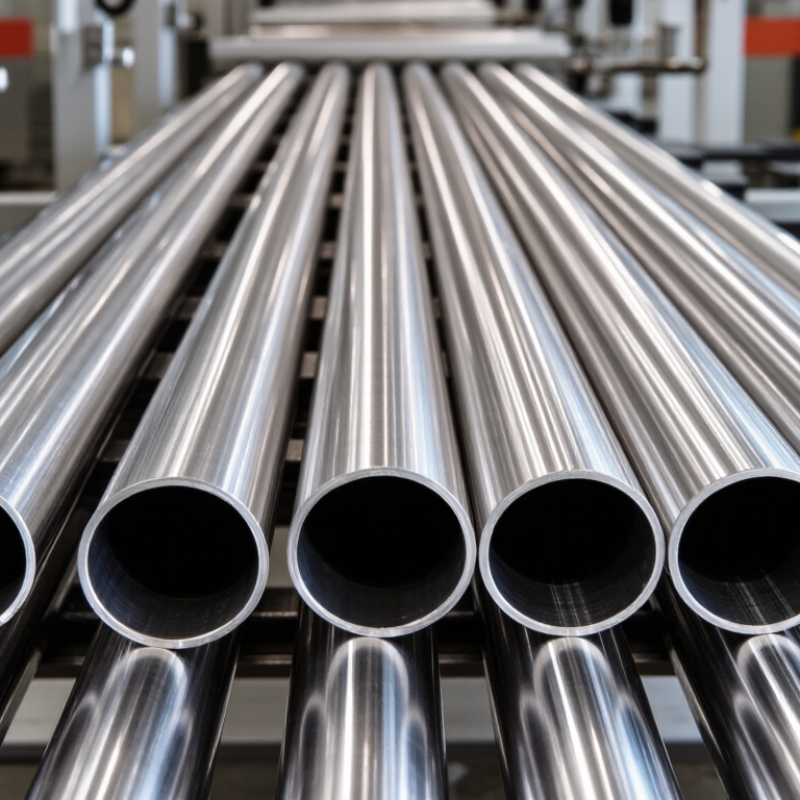
Top Stainless Steel Tubing Manufacturers in the World

Stainless Steel Tubing: Definition, Types, and Key Properties

Stainless steel tubing is a hollow product measured by its outside diameter and wall thickness. Unlike pipe, which is commonly specified by nominal size and schedule, tubing dimensions are stated directly. The distinction matters when a tube must fit a compact heat exchanger or instrument assembly. It is not always applied consistently in everyday purchasing, so check the governing specification. ASTM A269 covers seamless and welded austenitic stainless steel tubing for general service.

Common manufacturing types include welded tubing, formed from strip and joined along a seam, and seamless tubing, made without a longitudinal weld. Each requires suitable inspection and quality controls.

Grade selection depends on the environment, temperature, pressure, and fabrication needs. Austenitic grades such as 304 offer broad corrosion resistance and formability; 316 includes molybdenum for better resistance to many chloride environments. Neither is immune to every form of corrosion. Ferritic grades provide different magnetic and cost characteristics, while duplex grades combine austenitic and ferritic structures with higher strength.

The World Stainless Association reported 58.4 million tonnes of global stainless steel melt-shop production in 2023, showing the scale of the material supply behind many applications. That figure covers stainless steel overall, not tubing alone.

For composition, ASTM A240 lists 304 stainless steel at 18–20% chromium and 8–10.5% nickel. Useful starting points, not a substitute for checking service conditions.

How Stainless Steel Tubing Is Manufactured and Tested

Stainless steel tubing begins with carefully controlled chemistry and clean raw material. For seamless tubing, a heated billet is pierced, then elongated and drawn through dies. Welded tubing follows another route: flat strip is formed into a cylinder, its seam joined, and the tube sized. Heat treatment can restore useful properties after forming. Pickling removes surface scale, while drawing helps control diameter and wall thickness. Small variations matter.

Testing checks whether the finished tube matches its intended service. Inspectors measure outside diameter, wall thickness, straightness, and surface condition. Depending on the specification, tests may include tensile testing, hardness checks, hydrostatic pressure testing, or eddy-current examination of welds. Each method finds different flaws; none proves suitability for every temperature, pressure, or corrosive environment. A polished surface can look reassuring, but appearance alone tells little about internal quality.

Tips: Ask for material traceability and the applicable test records, not just a general certificate. Check that sampling frequency and acceptance limits match the purchase specification. I would also confirm how ends were prepared and protected in transit; it is an easy detail to overlook. Quality control has limits, and service conditions can be more demanding than a test bench.

Top Stainless Steel Tubing Manufacturers in the World - How Stainless Steel Tubing Is Manufactured and Tested

Manufacturing or Testing Stage What Happens Key Quality Checks Commonly Relevant Specifications or Methods
Material selection Stainless steel is selected by grade and product requirements, including corrosion resistance, temperature, pressure, and intended service. Review of material identification, chemical composition, and required mechanical properties. Product specifications such as ASTM A269 for certain seamless and welded austenitic stainless steel tubing, or ASTM A213 for boiler, superheater, and heat-exchanger tubes.
Tube forming Seamless tubing is formed from a solid billet; welded tubing is made by forming strip or sheet into a tubular shape and joining the edges. Dimensional control and, for welded products, monitoring of the longitudinal weld seam. Manufacturing route and applicable requirements depend on the specified product standard.
Heat treatment Where required by the product specification, tubing is heat-treated to achieve specified metallurgical and mechanical properties. Control of the specified treatment cycle and verification of properties required by the order or standard. Heat-treatment requirements vary with alloy grade, product form, and governing specification.
Sizing and finishing Tube dimensions and surface condition are brought to the required form through operations such as sizing, straightening, cutting, and finishing. Outside diameter, wall thickness, length, straightness, and visual surface condition are checked against specified tolerances. Dimensional tolerances are defined by the applicable product specification and purchase requirements.
Chemical and mechanical testing Samples may be tested to confirm the material’s chemistry and mechanical properties. Chemical analysis and applicable tensile, hardness, or other specified tests. Test requirements depend on the grade and product standard; ASTM product specifications define applicable requirements for their scope.
Hydrostatic or nondestructive testing Depending on the product specification, tubing may undergo a hydrostatic pressure test or a specified nondestructive examination. Assessment for leakage or detectable imperfections using the method and acceptance criteria specified for the product. ASTM E213 covers ultrasonic testing of metal pipe and tubing; ASTM E426 covers electromagnetic (eddy-current) examination of seamless and welded tubular products.
Final inspection and traceability Finished tubing is reviewed before release, with identification and records maintained as required by the order. Confirmation of dimensions, surface condition, markings, test documentation, and traceability information where specified. Inspection and documentation requirements are set by the applicable product standard and purchaser requirements.

Note: Manufacturing steps and tests vary by alloy, tubing type, application, and governing specification. The standards listed are examples of commonly relevant references, not requirements for every stainless steel tube.

Criteria for Comparing Global Tubing Manufacturers

Comparing global stainless steel tubing manufacturers requires more than checking price lists. Start with the grade range and the intended service conditions. Tubing for a food-processing line may need different surface finishes and documentation than tubing for a heat exchanger. Ask how wall thickness, outside diameter, and ovality are measured. Small variations can complicate installation.

Quality evidence matters. Look for documented inspection procedures, material certificates, and traceability from batch to shipment. For critical applications, ask whether testing can include pressure, corrosion, or weld integrity checks. The exact tests should match the design requirements, not simply appear on a brochure. Details count. Compare how a manufacturer handles nonconforming material and whether inspection records are available for review. A polished certificate is useful, but it cannot replace consistent production controls.

Capacity and communication also deserve attention. Request realistic lead times for the required dimensions, tolerances, and finish, rather than a generic delivery estimate. Technical staff should be able to discuss forming, welding, and fabrication limits in clear terms. Visit a facility if practical; even a short walk through storage and inspection areas can reveal useful habits. Still, one visit is only a snapshot. I would compare sample results and repeat-order consistency before drawing firm conclusions.

Leading Stainless Steel Tubing Manufacturers by Region

Stainless steel tubing manufacturers vary by region because industrial demand, raw-material access, and production skills differ. European producers often serve sectors that require tight dimensional control, clean finishes, and documented material traceability. North American manufacturers commonly support energy, construction, food processing, and transport projects, where dependable delivery and established testing procedures matter. East Asian production hubs offer broad capacity, including welded and seamless tubing in many sizes. India has also developed a strong manufacturing base for domestic infrastructure and export markets. These are general patterns, not guarantees. A regional label alone says little about one plant’s actual quality.

Compare manufacturers by the details that affect installation and service life. Ask about steel grade, wall-thickness tolerance, surface condition, weld inspection, and certificates for each production lot. For example, a tube used in a washdown area may need a smoother internal finish than one used in a structural frame. Check whether sample testing and custom lengths are available, and clarify how defects or delayed shipments are handled. Small details matter. Not always. Regional comparisons can oversimplify: two nearby factories may use very different equipment and inspection routines. Reviewing current technical documents and discussing the intended operating conditions gives buyers a more reliable basis for choosing a supplier.

Leading Stainless Steel Tubing Manufacturing Regions

Regional stainless steel production provides context on the material supply base that supports tubing manufacturers. The figures show 2023 stainless steel production, not tubing output or manufacturer counts. Source: World Stainless, 2023 production figures, rounded.

Industries and Applications Served by Major Manufacturers

Major stainless steel tubing manufacturers serve food processing, chemical production, water treatment, energy, and transport. Each industry needs different performance. Food plants often specify smooth internal surfaces for cleanable product lines. Chemical facilities may require alloys selected for corrosive fluids and operating temperatures. Energy projects use tubing in boilers, heat exchangers, and fluid systems. Details matter. Welded and seamless products are not interchangeable in every pressure or inspection requirement.

The World Stainless Association reported global stainless steel production of 58.4 million tonnes in 2023. This figure covers stainless steel overall, not tubing alone, but it shows the scale of its industrial supply base. The International Energy Agency’s World Energy Investment 2024 report projected more than $2 trillion in clean-energy investment that year, supporting demand for durable components in power and process systems. Investment does not translate directly into tubing orders. Specifications, fabrication capacity, and project timing all intervene. That distinction is easy to overlook. Buyers also need to check grade, wall thickness, surface finish, and traceability against the actual service conditions. A polished tube can still be the wrong choice.

FAQS

What is stainless steel tubing?

It is a hollow product measured by outside diameter and wall thickness. Pipe is often specified by nominal size and schedule. Check the governing specification, since everyday usage can be inconsistent.

How do welded and seamless tubing differ?

Welded tubing is formed from strip and joined along a seam. Seamless tubing has no longitudinal weld. Both need suitable inspection and quality controls.

How should I choose a stainless steel grade?

Consider the environment, temperature, pressure, and fabrication needs. Grade 304 offers broad corrosion resistance and formability. Grade 316 contains molybdenum and resists many chloride environments better. Neither handles every condition.

What dimensions should I check before ordering?

Confirm outside diameter, wall thickness, and ovality measurements. Small variations can make a tube difficult to fit into a compact heat exchanger or instrument assembly. Details matter.

What quality records should I request?

Ask for material certificates, inspection procedures, and traceability from batch to shipment. For critical use, discuss pressure, corrosion, or weld-integrity testing. Tests should match the design.

How can I compare tubing suppliers?

Compare the required grade, tolerances, surface finish, inspection records, and realistic lead time. Ask how defects are handled. A polished certificate alone proves little.

Do manufacturing regions guarantee particular quality?

No. Regions may have common industrial strengths, but individual factories vary in equipment and inspection routines. A regional label is not enough.

How can I judge a supplier’s consistency?

Review sample results and repeat-order performance. A facility visit may reveal storage and inspection habits, but it is only a snapshot. I would not decide from one visit alone.

Conclusion

Stainless Steel Tubing is valued for its strength, corrosion resistance, durability, and ability to perform in demanding environments. Available in different grades, shapes, and manufacturing forms, it can be selected to suit requirements such as pressure tolerance, temperature range, cleanliness, and dimensional precision. Production typically involves forming, welding or seamless processing, heat treatment, and finishing, followed by inspections and tests to verify quality and consistency.

Comparing manufacturers worldwide involves looking at material standards, production capabilities, quality-control practices, customization options, delivery reliability, and technical support. Leading suppliers across different regions serve a broad range of industries, including construction, energy, transportation, food processing, and healthcare. Their products are used in applications such as fluid conveyance, structural systems, heat exchange, and specialized equipment. Understanding these factors helps buyers match tubing specifications and supplier capabilities to the performance needs of each project.


Liam

Liam

Liam is a dedicated marketing professional with a profound expertise in the industry, where he excels at highlighting the unique advantages of our core products. With a keen understanding of market trends and consumer needs, Liam frequently updates our company’s professional blog, providing......