Choosing the best China 304 Stainless Round Bar supplier requires more than comparing online prices. Quality hides inside chemistry, traceability, machining accuracy, and delivery discipline. The World Stainless Association reported global crude stainless steel production of approximately 58.4 million tonnes in 2023. That scale reflects strong demand, but it also creates uneven supplier performance.
A dependable supplier should provide mill test certificates, heat numbers, positive material identification, and dimensional inspection records. Buyers should verify compliance with ASTM A276 or EN 10088-3, depending on the project. Ask for actual test results, not attractive promises. Nickel content, surface finish, straightness, and tolerance can affect welding, forming, and long-term service.
Dr. J. R. Davis, a recognized stainless steel specialist and editor of ASM’s Stainless Steels handbook, states, “The corrosion resistance of stainless steels is due to the formation of a thin, adherent, protective oxide film on the surface.” This principle explains why contamination control matters during storage and processing. A careless supplier can damage that protection with carbon-steel handling equipment.
Experience matters.
The strongest candidates usually show factory photographs, inspection workflows, export records, and clear answers about production capacity. They should explain whether the bar is hot-finished, cold-drawn, peeled, or centerless-ground. Independent audits and third-party testing add confidence, although they cannot replace careful buyer verification. Some suppliers may present impressive certificates while offering inconsistent batches. That possibility deserves attention.
This guide evaluates China-based suppliers through technical evidence, production experience, responsiveness, and after-sales reliability. The “best” supplier is rarely the cheapest. It is the partner that delivers consistent 304 Stainless Round Bar, documented performance, and fewer surprises after arrival.
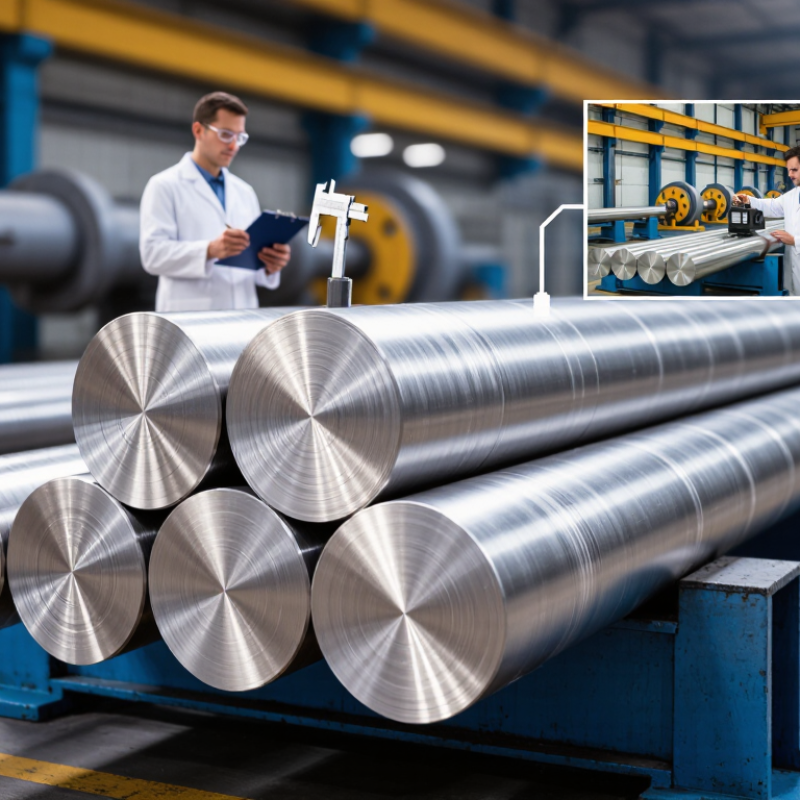
What Is the Best China 304 Stainless Round Bar Supplier?
304 stainless round bar is an austenitic stainless steel valued for balanced corrosion resistance, strength, and fabrication performance. Its defining chemistry contains 18–20% chromium and 8–10.5% nickel. Chromium forms a passive protective film on the surface. Nickel helps maintain the austenitic structure and improves toughness during forming.
The remaining composition also matters. Iron forms the base, while carbon, manganese, silicon, phosphorus, and sulfur require controlled limits. A well-made round bar should show a clean surface, consistent diameter, and no deep grinding marks. It should also arrive with a mill test certificate listing chemical results and mechanical properties. Numbers matter more than polished photographs.
Check the details.
For a supplier, ask how each heat is identified and tested. Useful records include heat numbers, dimensional inspection reports, tensile results, and corrosion-related specifications. A 25 mm bar should not vary widely across several measurements. Calipers reveal problems quickly. So does a careful visual check under bright light.
A bright surface can mislead. It is easy to trust appearance too much. I would also verify the applicable standard, delivery condition, cutting tolerance, and packaging method. Moisture trapped inside poor wrapping may leave stains before installation. This is not always a material failure, but it still creates avoidable work. A dependable supplier communicates limits clearly and does not promise performance without reviewing the intended environment, machining process, and required certification.
| Evaluation Dimension | Typical 304 Stainless Round Bar Data | Recommended Supplier Requirement | Verification Method |
|---|---|---|---|
| Material designation | AISI 304; UNS S30400; EN 1.4301 | The quotation and certificates should clearly identify the material grade and applicable standard. | Review the mill test certificate and product marking. |
| Chromium content | 18.0–20.0% by mass | Every heat should meet the specified chemical composition range. | Check the heat analysis on the material certificate. |
| Nickel content | 8.0–10.5% by mass for EN 1.4301; applicable standards may specify up to 11.0% | The supplier should confirm the exact standard used before production. | Compare the certificate values with the purchase specification. |
| Carbon content | Maximum 0.08% | Low-carbon compliance is important when welding requirements are specified. | Verify carbon analysis and welding documentation where required. |
| Manganese and silicon | Manganese: maximum 2.00%; Silicon: maximum 1.00% | Chemical composition should be controlled consistently from heat to heat. | Review the full chemical analysis rather than only the grade name. |
| Phosphorus and sulfur | Phosphorus: maximum 0.045%; Sulfur: maximum 0.030% | The supplier should provide traceable heat-level test results. | Check the original certificate and heat number. |
| Typical tensile strength | Minimum approximately 515 MPa for annealed bar under common ASTM requirements | Mechanical values must be quoted against a specific product standard and delivery condition. | Review tensile test results from an accredited laboratory. |
| Typical yield strength | Minimum approximately 205 MPa for annealed bar under common ASTM requirements | The supplier should state whether the bar is annealed, cold-finished, or cold-drawn. | Compare test results with the agreed delivery condition. |
| Elongation | Minimum approximately 40% in commonly specified annealed conditions | Suitable elongation should be confirmed for forming, machining, or fabrication applications. | Check the tensile test report and gauge-length details. |
| Hardness | Approximately 201 HB maximum under common ASTM annealed-bar requirements | Hardness limits should match the selected standard and finishing condition. | Review hardness results and the stated test method. |
| Density | Approximately 8.00 g/cm³ | Weight calculations should use the agreed diameter, length, and density basis. | Check theoretical weight against actual shipment weight. |
| Surface condition | Common options include hot-rolled, peeled, ground, polished, or cold-drawn | The surface finish, straightness, and allowable defects should be defined before ordering. | Use approved samples, drawings, and visual inspection criteria. |
| Diameter tolerance | Tolerance depends on the product standard, size range, and finishing process | A reliable supplier should confirm dimensional tolerances in the quotation and inspection plan. | Measure multiple points with calibrated instruments. |
| Length supply | Fixed lengths or random lengths are commonly available | The order should specify length range, cutting tolerance, end condition, and bundling method. | Inspect random bundles and review the packing list. |
| Traceability | Heat number, size, grade, and batch information should remain identifiable | Full traceability from raw material to shipment is a key supplier-selection criterion. | Match bar markings, labels, certificates, and packing records. |
| Quality documentation | Material certificate, dimensional report, and packing list are commonly required | Documentation should be supplied in English and linked to the shipped heat or batch. | Approve documents before shipment or during pre-shipment inspection. |
| Best supplier profile | Consistent chemistry, stable dimensions, verified mechanical properties, and secure packaging | Choose the supplier that demonstrates compliance, traceability, inspection capability, and dependable delivery—not only the lowest price. | Use samples, third-party inspection, certificate review, and delivery-performance records. |
It should reach at least 515 MPa tensile strength. Yield strength commonly reaches 205 MPa, with 40% minimum elongation. Treat these as acceptance limits, not decoration.
Request a heat-specific mill test certificate. It should show the heat number, diameter, chemistry, test results, and testing method. Generic certificates need careful questioning.
Compare heat markings with packaging photos and certificate details. Check several bars, not only one sample. A complete report can still represent another heat.
Density near 8.0 g/cm³ supports identification. It cannot replace chemical testing. Verify chromium, nickel, carbon, and other relevant elements independently.
Confirm nominal diameter, tolerance class, straightness, and ovality requirements. Avoid vague phrases like “standard tolerance.” Clear limits prevent later machining disputes.
Use calibrated micrometers. Measure several points along each bar, including both ends. A 30 mm bar may vary near the cut.
Check for scratches, seams, pits, and heavy scale. Bright surfaces can mislead. Good appearance does not prove correct chemistry or strength.
Yes, especially for important shipments. Compare laboratory results with the supplier’s certificate. No check is perfect, but independent testing exposes mismatches.
Salt exposure, welding, and temperature can change corrosion and forming expectations. Consider the actual environment, not only the material label. This part is easy to underestimate.
Choosing the best 304 Stainless Round Bar supplier requires more than comparing prices. First, confirm that the material contains approximately 18–20% chromium and 8–10.5% nickel, providing the corrosion resistance and durability expected from 304 stainless steel. The supplier should also demonstrate compliance with ASTM A276, including a minimum tensile strength of 515 MPa. Reliable documentation, especially an EN 10204 Type 3.1 mill certificate, helps verify chemical composition, mechanical performance, heat information, and traceability.
Quality should be assessed through measured dimensions, suitable tolerances, surface condition, and a density close to 8.0 g/cm³. Buyers should also compare minimum order quantities, production and delivery lead times, available testing, packaging, communication, and total landed cost rather than focusing only on the unit price. The best supplier is one that consistently provides conforming products, complete inspection records, dependable delivery, and commercially practical terms for the intended application.

 Oes Steel