China is a major manufacturing base for welded stainless steel pipe, serving construction, energy, food processing, and chemical industries. According to the World Stainless Association’s 2023 stainless steel production data, global crude stainless steel output reached 58.4 million tonnes, up 4.6% from 2022. This figure describes stainless steel production, not pipe output. Still, it shows the scale of the material supply behind a highly competitive market. Buyers need more than a low quotation.
This guide to China’s top welded stainless steel pipe suppliers focuses on practical checks: grade and dimensions, welding methods, traceability, inspection records, and delivery capacity. Standards such as ASTM A312 and EN 10217-7 can help buyers define requirements, but they cover different product scopes. Confirm that a supplier’s stated compliance matches the pipe, application, and order documents. Ask for material test certificates and, where relevant, weld and pressure-test records. Details matter.
A polished catalog is not proof of consistent production. Nor does one successful sample guarantee every shipment. Supplier comparisons should consider documented quality controls, communication, and repeat-order performance—not rankings alone. The evidence can be uneven. That is worth acknowledging. A careful shortlist gives purchasing teams a clearer basis for evaluating China’s welded stainless steel pipe suppliers and choosing a partner suited to the job.
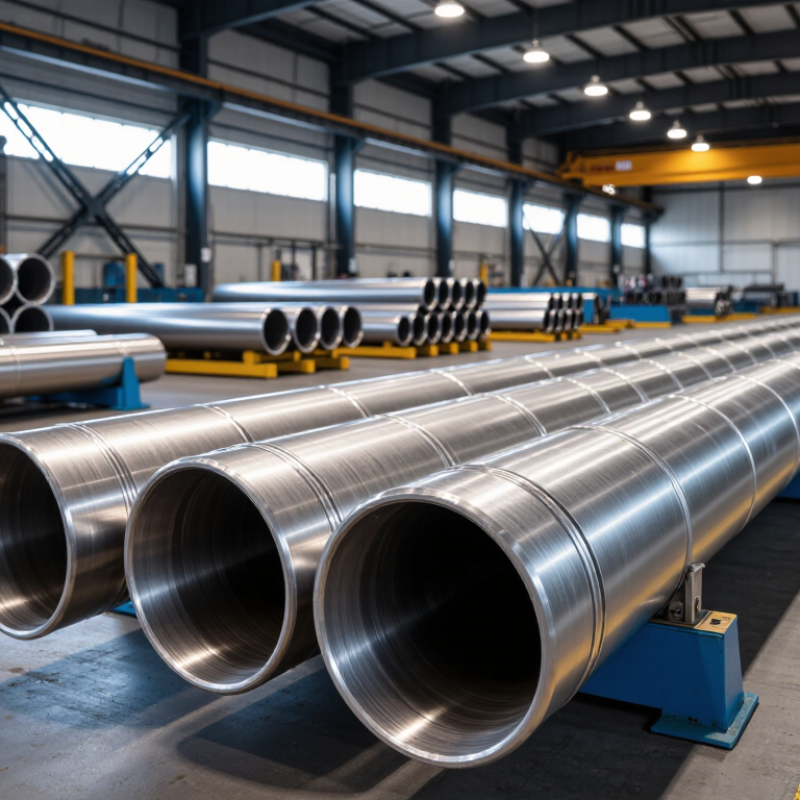
China’s Welded Stainless Steel Pipe Supplier Landscape
China Top Welded Stainless Steel Pipe Suppliers
China’s welded stainless steel pipe supplier landscape includes large production facilities, specialist fabricators, and export-focused trading companies. Their capabilities differ. Some handle standard round pipe in high volumes; others focus on custom lengths, thin walls, or polished surfaces. A supplier’s location alone tells buyers little about consistency.
Useful discussions begin with a clear specification: grade, outside diameter, wall thickness, tolerance, finish, and intended service. Ask how the longitudinal weld is formed and inspected, and whether mill test certificates and traceability records are available for each batch. For critical applications, confirm that testing and documentation match the project’s stated requirements. Details matter.
Capacity claims can sound similar on paper. A sample may reveal uneven polishing, rough cut ends, or small variations in wall thickness that a catalogue cannot show. Buyers should compare lead times, packaging, and responses to technical questions, not just quoted prices. Even a careful process has limits; supplier data should be checked against the actual order, and assumptions should be written down before production begins.
How Welded Stainless Steel Pipes Are Made and Classified
Welded stainless steel pipe begins as a flat strip or coil, selected for its grade, thickness, and intended service. Roll-forming stands gradually bend the metal into a tube. The edges meet along a straight seam. A welding process, often TIG or high-frequency welding, joins them; the choice depends on material and production needs. Small details matter. The pipe is then sized, straightened, and cut to length. Depending on its specification, the weld may be cleaned or treated to restore corrosion resistance. Inspection can include visual checks, dimensional measurement, and nondestructive testing.
Classification is not based on one feature alone. Pipes may be grouped by manufacturing process, outside diameter, wall thickness, stainless grade, surface finish, or applicable standard. Most common welded pipes have a longitudinal seam, while some larger pipes use a spiral seam. Finishes range from pickled and matte to polished, with the right choice shaped by hygiene, appearance, and cleaning demands. A smooth surface is useful, but it does not prove the pipe suits a corrosive or high-pressure service. Check the grade, tolerances, weld inspection, and stated application together. That distinction is easy to overlook.
Quality Standards and Certifications Used by Chinese Suppliers
Chinese welded stainless steel pipe suppliers should be assessed against the exact service conditions, not certificates alone. ASTM A312/A312M covers seamless, welded, and heavily cold-worked austenitic stainless steel pipe; it does not replace a project-specific purchase specification. For product dimensions and tolerances, buyers may also need to check the applicable Chinese GB/T standard and confirm that its grade and requirements match the order. Small differences matter. A tube for a wet food-processing line has different risks from one carrying hot chemicals.
Certification scope deserves close attention. ISO 9001 addresses quality-management systems, while ISO 14001 concerns environmental management; neither certifies every pipe batch. The International Stainless Steel Institute reported 58.4 million tonnes of global stainless crude steel production in 2023, a useful measure of the industry’s scale, not proof of any supplier’s quality. Ask for batch-linked inspection records, heat numbers, chemical and mechanical test results, and an EN 10204 Type 3.1 inspection certificate where specified. For critical applications, consider independent dimensional checks and non-destructive testing. A certificate can look convincing. Traceability is what connects it to the pipe. One practical weakness in many sourcing reviews is relying on scanned documents without checking the issuing body or certificate scope. That extra check takes time, but can prevent costly misunderstandings.
Key Factors for Evaluating and Comparing Suppliers
China Top Welded Stainless Steel Pipe Suppliers
Key Factors for Evaluating and Comparing Suppliers
When comparing welded stainless steel pipe suppliers in China, look beyond price and catalog photos. Ask for material certificates that identify the grade and heat number, then check that those details match the pipe labels and inspection records. Check the records. For a sample, measure wall thickness and outside diameter at several points, not just one convenient spot. Confirm the stated tolerances and surface finish suit your application.
Review how weld quality is controlled. Ask whether the supplier uses visual inspection and suitable nondestructive testing, and request recent test reports for comparable products. Small details matter. Compare production capacity, minimum order quantities, lead times, and packaging methods. A low quotation may exclude testing, protective end caps, or moisture-resistant wrapping. Clarify these items before comparing total costs.
Communication is also evidence of reliability. Send the same technical drawing and questions to each supplier, then note whether responses address specifications clearly or rely on vague assurances. If possible, assess a sample or arrange a factory audit with a qualified inspector. Neither step guarantees every production batch will match; that is an imperfect part of supplier selection. Ask how complaints are documented and how corrective actions are verified, rather than accepting verbal promises.
China Top Welded Stainless Steel Pipe Suppliers: Comparing Grade Chemistry
Specified chromium content is one useful material-verification point when evaluating suppliers. The ranges below are typical weight-percent limits for these stainless steel grades; confirm the applicable product standard and purchase specification.
Supplier check: Compare the quoted grade with the material test certificate and verify that the certificate and pipe marking match the order.
Export, Delivery, and After-Sales Service Considerations
For welded stainless steel pipe exports, delivery planning starts before the order is packed.
Confirm the grade, outside diameter, wall thickness, length tolerance, and required inspection records in writing. These details help prevent delays when documents are checked against the cargo. Ask the supplier to confirm which certificates and packing lists will accompany the shipment.
Small details matter. Pipe ends should be protected, and bundles need secure supports that limit movement during handling. Request photos of packed goods and clear package markings, especially when several sizes share a container. Also agree on the delivery term, named destination, and estimated dispatch date. A quoted lead time may change if production, inspection, or vessel schedules shift, so ask what milestones trigger updates.
After arrival, compare the quantity and visible condition with the shipping documents before signing for receipt. Photograph damaged wrapping, dents, or wet packaging promptly. For any dimensional or welding concern, share the pipe identification marks and inspection evidence with the supplier. Traceable records make follow-up easier, though they cannot replace a careful incoming check. A spreadsheet can look complete while one bundle is mislabeled. That happens. Set a response contact and a reasonable timeframe for technical replies before purchase, rather than discovering the gap after installation planning begins.
Conclusion
China has a diverse landscape of welded stainless steel pipe suppliers, serving industries that need reliable tubing in a range of materials, sizes, and finishes. Understanding how a Welded Stainless Steel Pipe is formed and classified helps buyers match products to their intended applications. Supplier offerings may differ in production capabilities, customization options, and the consistency of their quality controls, so clear product specifications are essential when comparing potential partners.
A thorough evaluation should consider relevant quality standards and certifications, manufacturing experience, inspection procedures, communication, and the ability to meet delivery requirements. Buyers should also confirm packaging, export documentation, shipping arrangements, and after-sales support before placing an order. By comparing these factors and agreeing on expectations in advance, purchasers can make informed decisions and build dependable supplier relationships.

 Oes Steel