Choosing a Seamless Stainless Steel Pipe starts with the service conditions, not the catalogue description. Temperature, pressure, fluid chemistry, and cleaning requirements all matter. A pipe carrying hot chloride-bearing water faces different risks from one moving dry air. Small differences count.
Industry scale offers useful context, but it cannot replace application-specific checks. The World Stainless Association’s Stainless Steel in Figures 2024 report records 58.4 million tonnes of global stainless-steel crude production in 2023. That figure reflects a broad, active materials sector; it does not identify the right pipe grade for a particular system. Buyers still need to verify the applicable specification, such as ASTM A312/A312M for covered austenitic stainless-steel pipe, and confirm grade, outside diameter, wall thickness, and manufacturing condition with the supplier.
Look beyond “seamless” on the label. Review material test certificates, traceability, dimensional tolerances, and inspection requirements. Match the grade to corrosion exposure, and check design codes and project documents before ordering. A familiar grade is not automatically the safest choice. Nor does seamless construction guarantee better performance in every service. That distinction is easy to miss.
This guide explains how to compare grades, specifications, dimensions, and supplier documentation. It also flags questions worth asking before purchase, including whether the available evidence fits the actual operating environment. Some decisions remain uncertain until process details are confirmed. Better to pause and verify.
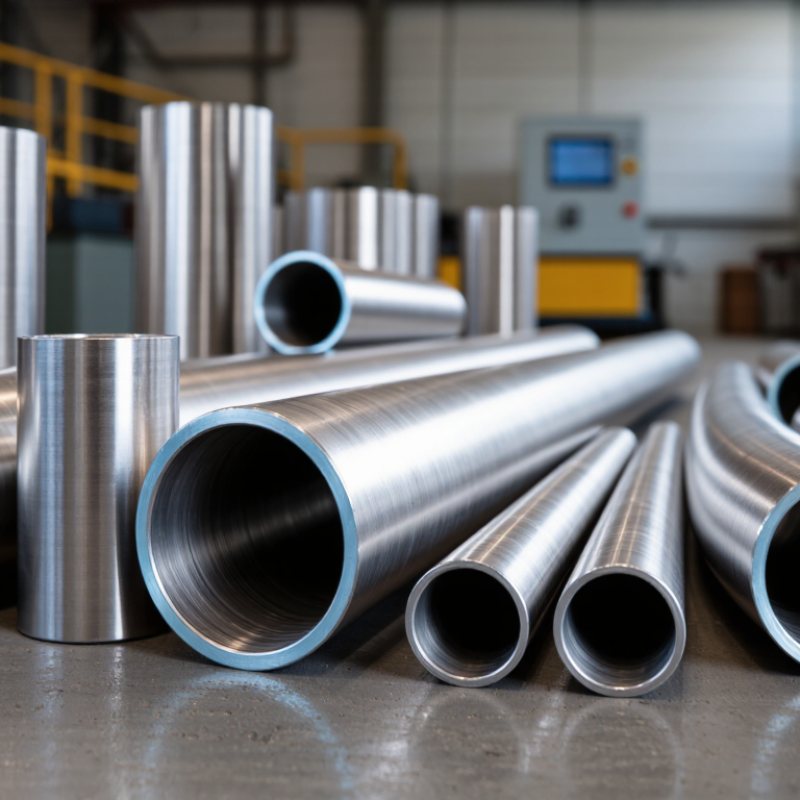
Define the Pipe’s Intended Use and Operating Conditions
A seamless stainless steel pipe should be selected for the job it must perform, not just its diameter or grade. Write down the fluid, operating temperature, maximum pressure, and cleaning chemicals. Then check for chlorides, suspended solids, and repeated pressure or temperature changes. A warm, chloride-rich line can pit even when the pipe looks clean from the outside. Small details matter.
The NACE IMPACT study estimated corrosion costs at US$2.5 trillion annually, or 3.4% of global GDP, and found that improved corrosion management could save 15–35% of those costs. That figure is a reminder, not a pipe-selection formula. Stainless steel is not immune to corrosion. Match the material grade to the actual chemistry, and verify pressure and temperature limits against the applicable design code. ASTM A312 covers seamless stainless steel pipe for high-temperature and general corrosive service; it does not replace application-specific engineering checks. I used to treat pressure rating as the main filter. That misses chemical exposure and cleaning cycles. If the service data are incomplete, pause and confirm them before specifying the pipe.
Select a Stainless Steel Grade for the Service Environment
For seamless stainless steel pipe, choose the grade according to the fluid, temperature, and surroundings—not the label alone. Grade 304 often suits clean indoor water and many general-purpose lines. Salt spray, coastal air, or chloride-bearing process water can make pitting more likely. Grade 316, with added molybdenum, may offer better resistance in these conditions, but it is not immune to corrosion.
Look closely at the actual service. A pipe carrying warm, stagnant liquid may face a different risk than one carrying the same liquid at steady flow. Chlorides can concentrate beneath deposits or at crevices, and elevated temperatures may increase the chance of localized attack. Check the fluid chemistry, operating temperature, cleaning agents, and any shutdown conditions. Small details matter.
Do not select a grade from a short description alone. Confirm the material specification and traceability documents, then compare them with the project’s design requirements. If welding or forming is planned, make sure the grade and procedure suit that work. A corrosion chart is useful, but it cannot capture every operating change. I would treat any quick grade recommendation as provisional until the service conditions are clear.
Determine the Required Diameter, Wall Thickness, and Length
Determine the required diameter from flow rate, fluid properties, and acceptable pressure loss. Do not size by the nominal pipe label alone. ASME B36.19M dimensional tables show that NPS 2 pipe has a 60.3 mm outside diameter. Its Schedule 10S wall is 2.77 mm, leaving an approximate 54.8 mm internal diameter. Schedule changes the bore, and therefore affects flow velocity. Measure twice.
Choose wall thickness for the operating pressure and temperature, not just the lowest purchase cost. Account for corrosion or erosion allowance, loads, and the applicable piping design code. ASTM A312/A312M sets requirements for stainless steel pipe, but it does not replace project-specific design calculations. A thinner wall may save weight; it also leaves less margin for damage. That trade-off deserves a careful review.
Specify length in the way the pipe will be installed: finished cut length, end preparation, and any required fabrication allowance. Check the supplier’s length tolerances against the drawing, especially where short spool pieces must align with fixed nozzles. A few millimetres can matter. Record the required outside diameter, wall schedule or thickness, material grade, and length together on the purchase specification. One detail is easy to miss: confirm whether the stated length includes bevels or other end preparation.
How to Choose Seamless Stainless Steel Pipe? — Determine the Required Diameter, Wall Thickness, and Length
| Nominal Pipe Size (NPS) |
Outside Diameter |
Example Wall Thickness |
Approx. Inside Diameter |
Length to Specify |
Selection Check |
| 1/2 in (DN 15) |
21.3 mm (0.840 in) |
2.77 mm (0.109 in), Schedule 40S |
15.8 mm (0.622 in) |
Specify the required cut length; confirm available mill lengths with the supplier. |
Check that the calculated bore meets the required flow rate and connection size. |
| 1 in (DN 25) |
33.4 mm (1.315 in) |
2.77 mm (0.109 in), Schedule 40S |
27.9 mm (1.097 in) |
State the finished length and any cutting or end-preparation allowance. |
Consider flow, pressure, temperature, and the pipe’s connection method. |
| 2 in (DN 50) |
60.3 mm (2.375 in) |
2.77 mm (0.109 in), Schedule 40S |
54.8 mm (2.157 in) |
Confirm whether the order is for fixed cut lengths or standard stock lengths. |
Verify compatibility with fittings and valves specified by nominal size and schedule. |
| 4 in (DN 100) |
114.3 mm (4.500 in) |
3.05 mm (0.120 in), Schedule 40S |
108.2 mm (4.260 in) |
Include the number of pieces and tolerance required for each finished length. |
Check support spacing, operating loads, and corrosion conditions for the application. |
| 6 in (DN 150) |
168.3 mm (6.625 in) |
3.40 mm (0.134 in), Schedule 40S |
161.5 mm (6.357 in) |
Confirm transport and installation limits before choosing long pipe lengths. |
Have the required wall thickness checked against design pressure and applicable code. |
|
How to use this guide: The example dimensions are nominal pipe dimensions for Schedule 40S stainless steel pipe based on ASME B36.19M. Nominal pipe size is not the measured outside diameter. Inside diameters shown are approximate and are calculated as outside diameter minus twice the listed wall thickness. Actual dimensions, tolerances, available lengths, material grade, and product standards should be confirmed for the order and application.
|
Check Applicable Standards, Tolerances, and Test Requirements
Before ordering seamless stainless steel pipe, identify the standard that matches its service, grade, and manufacturing route. ASTM, ASME, and EN documents cover different products, so a familiar designation is not automatically suitable. Check the current edition and confirm the specification with the project engineer. Small detail, big difference. The purchase description should state the grade, outside diameter, wall thickness, length, and required inspection documents. Tolerances matter: a pipe may meet its nominal size yet still be unsuitable if wall variation, ovality, or straightness exceeds the project limit. For a close-fitting assembly, even a slight diameter change can complicate installation.
Read the test requirements as carefully as the dimensions. Depending on the specification and application, these may include hydrostatic testing, ultrasonic or eddy-current examination, tensile testing, or flattening tests. Not every project needs every test. Confirm acceptance criteria, sampling frequency, and whether results must be traceable to each heat or pipe length. Review the material test report for grade, chemistry, mechanical properties, and heat number. On receipt, measure several points around the circumference and check wall thickness at more than one location. Paperwork helps, but it does not replace inspection. I would still clarify any vague wording before release; that step is easy to postpone.
How to Choose Seamless Stainless Steel Pipe?
Check applicable standards, tolerances, and test requirements.
ASTM A312/A312M specifies a minimum tensile strength of 515 MPa for TP304 and TP316, and 485 MPa for their low-carbon counterparts TP304L and TP316L. These values are only one part of pipe selection: confirm the applicable specification and edition, dimensional tolerances, and required examinations and tests for the intended service.
Evaluate Manufacturers, Traceability, and Quality Documentation
When choosing seamless stainless steel pipe, assess the manufacturer’s process controls, inspection practices, and ability to provide consistent records. Ask how material is identified from production through packing. Heat numbers should connect pipe markings, bundle tags, and mill test certificates. Check that the stated grade, dimensions, and order details match across those documents. Small mismatches can delay acceptance.
Tips: Request a sample document set before ordering. Verify chemical composition, mechanical test results, dimensional checks, and any specified non-destructive testing. Keep asking. A certificate is useful, but it does not prove every pipe was inspected in the same way. Confirm which tests apply to your specification, and ask how measuring equipment is calibrated.
Traceability matters most when a question arises later. Ask whether the supplier can link a delivered bundle to its production and inspection records without relying on handwritten notes alone. Review document dates, signatures, and revision numbers. If records seem incomplete, request clarification before shipment. A polished PDF can still contain errors. I would not treat paperwork as proof by itself; compare it with visible markings and the agreed purchase requirements.
Conclusion
Choosing a Seamless Stainless Steel Pipe begins with understanding how and where it will be used. Consider the conveyed material, operating pressure and temperature, and exposure to corrosive or otherwise demanding conditions. These factors help determine a stainless steel grade suited to the service environment and support reliable performance over time.
Next, define the required outside diameter, wall thickness, and length based on system needs and installation constraints. Check that the pipe meets applicable standards, dimensional tolerances, and testing requirements for the intended application. Finally, assess manufacturers by reviewing their production capabilities, material traceability, and quality documentation. Clear records and consistent inspection practices make it easier to verify that the selected pipe matches the required specifications and can be confidently incorporated into the project.

 Oes Steel