Choosing the right 304 Ss Square Bar supplier is not simply a price comparison. It is a practical decision involving chemistry, dimensional accuracy, surface quality, documentation, and delivery reliability. A bar may look bright and straight, yet fail during machining or fabrication. That detail matters.
This guide reviews ten leading 304 Ss Square Bar suppliers worldwide through an engineering-focused lens. We consider mill certificates, ASTM A276 or equivalent compliance, available sizes, production capacity, cutting services, packaging, and export experience. We also examine whether suppliers communicate clearly when tolerances, heat numbers, or surface finishes need confirmation. Those small conversations often reveal more than a polished website.
Dr. James R. Davis, editor of ASM’s Stainless Steels reference, stated, “Stainless steel selection is a balance between performance, processing, and cost.” This principle remains useful for buyers comparing suppliers across different markets. The lowest quotation is not always the lowest total cost. Freight damage, inconsistent squareness, or missing traceability can quickly change the calculation. Still, supplier rankings are never perfect. Product availability shifts. Regional service quality can vary. A strong manufacturer in one application may be unsuitable for another.
The following assessment is intended for procurement teams, fabricators, distributors, and engineers. It emphasizes evidence rather than marketing claims. Where information is limited, that limitation is noted. That is important. A dependable supplier should withstand questions about material grade, testing, tolerances, packaging, and after-sales support before any purchase order is issued.
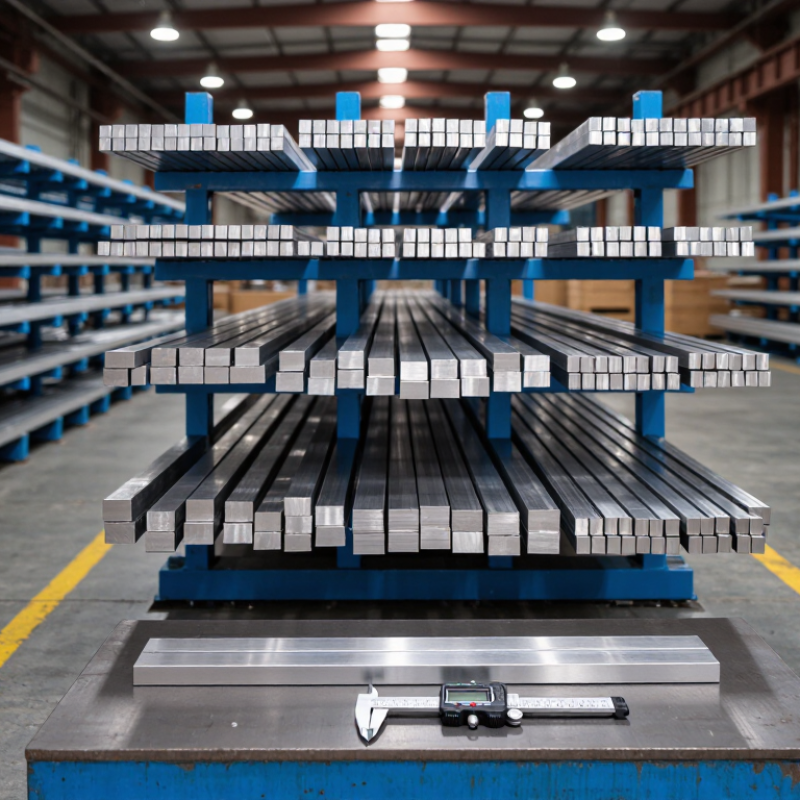
304 stainless steel square bar is a solid, four-sided metal product made from an austenitic stainless alloy. Its typical chemistry contains 18–20% chromium and 8–10.5% nickel, according to ASTM A276 material requirements. Chromium forms a passive oxide film, while nickel supports toughness and corrosion resistance. The result is a bar that performs well in food equipment, architectural frames, machinery parts, and general fabrication.
The standard mechanical baseline matters. ASTM A276 lists a minimum tensile strength of about 515 MPa and a minimum yield strength near 205 MPa for annealed 304 stainless steel. Its density is approximately 8.0 g/cm³, which affects shipping weight and cutting costs.
The International Stainless Steel Forum reported global stainless crude steel production at roughly 58.4 million tonnes in 2023. That figure shows the material’s industrial scale, but not every 304 square bar has equal quality.
Check the heat number, dimensions, surface finish, and mill certificate before comparing suppliers. A bright surface can hide internal problems. Cold-drawn bar may offer tighter tolerances, while hot-finished bar can suit heavier structural work. Welding usually performs well, but heat exposure may reduce corrosion resistance around the weld zone. That detail is often overlooked.
In practice, I would also verify straightness with a surface plate and calipers. A small dimensional error can become expensive during assembly. Material selection is rarely perfect; 304 may struggle in chloride-rich or highly acidic environments, where a higher-alloy grade deserves review.
Key Standards and Specifications for 304 Square Bars
When comparing worldwide 304 stainless steel square bar suppliers, start with the governing standard, not the catalogue photograph. ASTM A276/A276M covers stainless steel bars and requires 304 chemistry within defined limits, including 18.0–20.0% chromium and 8.0–10.5% nickel. Carbon is normally limited to 0.08%. These figures should appear on the mill test certificate, not only on a website.
Mechanical values also need careful reading. Under ASTM A276, annealed 304 bar commonly shows a minimum tensile strength of 515 MPa, yield strength of 205 MPa, and elongation of 40%. EN 10088-3 provides another widely used framework for stainless bar products, but grades, dimensions, and test conditions can differ. Check the exact edition. Small details matter.
The International Stainless Steel Forum reported 58.4 million tonnes of global stainless crude steel production in 2023. This scale supports broad availability, yet it does not guarantee consistent square-bar quality. Ask for heat numbers, dimensional tolerances, surface condition, straightness, and ultrasonic testing when the application demands it. ASTM A480/A480M may support general finish and tolerance references, but the purchase order should state the required size and finish clearly. A common mistake is treating 304 and 304L as interchangeable without checking welding requirements. They are related, but not identical. I would verify every certificate independently. Supplier claims can be incomplete.
| Rank | Anonymous Supplier Profile | Preferred Standard Route | Material Designation | Typical Cross-Section | Typical Length | Supply Condition | Tensile Strength (min.) |
Yield Strength (min.) |
Elongation (min.) |
Required Verification Documents |
|---|---|---|---|---|---|---|---|---|---|---|
| 1 | Profile A — ASTM-focused mill | ASTM A276 / ASTM A484 | 304 / UNS S30400 | 6–100 mm | 3–6 m | Hot-finished or cold-finished | 515 MPa | 205 MPa | 30% | MTC, chemical analysis, mechanical test results, dimensional report |
| 2 | Profile B — EN-focused mill | EN 10088-3 / EN 10204 | 1.4301 / X5CrNi18-10 | 10–150 mm | 3–6 m | Cold-drawn or peeled | 500 MPa | 190 MPa | 45% | EN 10204 3.1 certificate, heat number, chemical and mechanical results |
| 3 | Profile C — JIS-compatible mill | JIS G4318 / JIS G4303 | SUS304 | 6–100 mm | 2–6 m | Cold-finished or bright bar | 520 MPa | 205 MPa | 40% | JIS inspection certificate, chemical composition, tensile test report |
| 4 | Profile D — GB/T-compatible mill | GB/T 1220 / GB/T 702 | 06Cr19Ni10 | 8–120 mm | 3–6 m | Hot-rolled, forged, or cold-drawn | ≥515 MPa | ≥205 MPa | ≥40% | Mill certificate, heat traceability, size tolerance and surface report |
| 5 | Profile E — Precision bar specialist | ASTM A276 / ASTM A484 | 304 / UNS S30400 | 6–50 mm | 2–4 m | Cold-drawn, ground, or polished | 515 MPa | 205 MPa | 30% | MTC, calibrated dimensional inspection, straightness and surface-finish report |
| 6 | Profile F — Fabrication-stock supplier | ASTM A276 / ASTM A484 | 304 / UNS S30400 | 20–200 mm | 3–6 m | Hot-rolled or annealed | 515 MPa | 205 MPa | 30% | Heat certificate, ultrasonic testing where specified, dimensional inspection |
| 7 | Profile G — Machining-grade supplier | EN 10088-3 / EN 10278 | 1.4301 / X5CrNi18-10 | 10–80 mm | 2–4 m | Bright, peeled, or ground | 500 MPa | 190 MPa | 45% | EN 10204 3.1 certificate, EN 10278 dimensional class, surface report |
| 8 | Profile H — Architectural-finish supplier | ASTM A276 / ASTM A484 | 304 / UNS S30400 | 10–100 mm | 2–6 m | Polished, satin, or brushed | 515 MPa | 205 MPa | 30% | MTC, surface-finish specification, protective-packaging confirmation |
| 9 | Profile I — Cut-to-length supplier | ASTM A276 / ASTM A484 | 304 / UNS S30400 | 12–150 mm | Custom cut lengths | Annealed, hot-finished, or cold-finished | 515 MPa | 205 MPa | 30% | MTC, cut-length tolerance report, burr-control and traceability records |
| 10 | Profile J — Export-documentation supplier | ASTM A276, EN 10088-3, or JIS G4318 | 304 / 1.4301 / SUS304 | 6–200 mm | 2–6 m | Condition agreed in purchase specification | Standard-dependent | Standard-dependent | Standard-dependent | MTC, certificate of origin, packing list, commercial invoice, inspection report |
Choosing among global 304 stainless steel square bar suppliers requires more than comparing prices. The International Stainless Steel Forum reported roughly 60 million tonnes of stainless steel production in 2023. This scale creates wide differences in consistency, traceability, and delivery performance. Ask suppliers for mill test certificates, heat numbers, chemical analysis, tensile results, and dimensional tolerances. Confirm that testing follows recognized standards, such as ASTM A276/A276M or EN 10088. A certificate alone is not proof. Match its heat number with the bar and packing label.
Supplier evaluation should also include production experience and quality controls. Check whether the supplier operates calibrated spectrometers, tensile-testing equipment, and inspection records. Request recent inspection samples, not only catalogue photographs. ISO’s Survey of Management System Standard Certifications shows the broad use of ISO 9001, but certification does not guarantee every shipment will be perfect. I would also review corrective-action records and customer references. This step is often skipped, and that is a weakness. For international orders, examine lead-time history, moisture-resistant packaging, export documentation, and the supplier’s ability to handle small replacement quantities. Stainless pricing can change with nickel markets, so compare the quotation date and surcharge method carefully.
Tips: Measure a delivered sample with a vernier caliper before approving bulk production. Check corner radius, straightness, surface scratches, and corrosion marks. Keep photographs linked to the heat number. An independent inspection before shipment may cost more, but it can expose mixed grades or incorrect sizes early. Still, inspection has limits; supplier transparency remains essential.
Top 10 Worldwide Suppliers of 304 Stainless Steel Square Bars
The leading ten global suppliers should be judged by more than export volume. World Stainless reported approximately 58 million tonnes of stainless crude steel production in 2023, showing a broad and competitive supply base. Yet, production scale does not guarantee consistent square-bar quality. Experienced buyers should check ASTM A276 or equivalent compliance, heat numbers, mill test certificates, and traceable inspection records.
A reliable supplier normally provides 304 square bars with about 18% chromium and 8% nickel. Dimensional control also matters. Confirm side tolerance, straightness, corner radius, cutting accuracy, and surface condition before ordering. Bright, cold-drawn bars may suit machining, while hot-finished bars can support heavier fabrication. Ask for PMI testing when alloy verification is important. Small details matter.
The top ten should also demonstrate stable export capacity, practical packaging, and responsive technical support. Data from the International Stainless Steel Forum shows stainless demand remains closely linked to construction, processing equipment, and transport applications. Freight capability therefore deserves attention, especially for urgent projects. A polished website is not evidence. I would compare recent certificates, sample measurements, and delivery records before ranking any supplier. One weakness remains: public data rarely separates 304 square-bar sales from total stainless production, so every worldwide ranking requires careful judgment.
This chart compares the theoretical mass per metre of commonly specified 304 stainless steel square bar sizes. Values are calculated from nominal cross-sectional dimensions and a typical 304 stainless steel density of 7.93 g/cm³. Actual product weights may vary slightly because of manufacturing tolerances, surface finish, and dimensional standards.
Comparing 304 stainless steel square bar suppliers requires more than checking online prices. Ask for a current mill test certificate with each quotation. It should show chemical composition, mechanical properties, heat number, and standard compliance. A reliable supplier can also provide positive material identification, dimensional inspection, and surface photographs. Request samples when tolerances are critical. A bar may look bright but still vary in corner radius or straightness.
Pricing should include cutting, polishing, packaging, testing, and freight. Compare the price per kilogram, not only the quoted bar price. Check whether the offer covers export documentation and insurance. Small orders often carry higher processing costs. That detail is easy to miss.
I once compared two offers with identical prices, but one excluded wooden packing and port charges. The cheaper option became more expensive later.
Delivery performance depends on stock accuracy and production capacity. Ask for the actual dispatch date, not a vague lead-time range. Confirm the shipping route, minimum order quantity, bundle weight, and replacement policy. Each bundle should carry clear heat numbers and size labels. Suppliers with traceable records usually answer technical questions without hesitation. Still, no supplier is perfect. Delays happen, and promised dates deserve written confirmation. A practical evaluation should weigh quality evidence, total landed cost, communication speed, and delivery history together.
ASTM A276/A276M commonly covers stainless steel bars. EN 10088-3 provides another widely used framework.
Chromium usually ranges from 18.0% to 20.0%. Nickel commonly ranges from 8.0% to 10.5%. Carbon is normally limited to 0.08%.
Typical minimum values include 515 MPa tensile strength, 205 MPa yield strength, and 40% elongation.
Request a mill test certificate, heat number, inspection records, and dimensional measurements. Verify certificates independently. Websites are not enough.
Confirm side tolerance, straightness, corner radius, and cutting accuracy. A caliper measurement can reveal problems quickly.
Bright, cold-drawn bars may suit machining. Hot-finished bars can support heavier fabrication. Surface condition should appear in the purchase order.
Not always. They are related grades, but welding requirements may differ. Check the project specification before substituting one grade.
PMI testing can confirm alloy identity when chemistry is important. Ultrasonic testing may help when internal quality matters.
No. Production scale does not guarantee consistent quality. Compare recent certificates, sample measurements, packaging, and delivery records.
Public data rarely separates square-bar sales from total stainless production. Rankings therefore involve judgment, and some conclusions may remain uncertain.
This guide explains what a 304 Ss Square Bar is and why it is widely selected for construction, fabrication, food-processing equipment, architectural components, and general industrial applications. It reviews the material’s corrosion resistance, strength, weldability, surface options, and typical dimensions, while also introducing key standards and specifications used to verify chemical composition, mechanical performance, tolerances, finishing, and inspection requirements.
The article also presents a practical method for evaluating worldwide suppliers without focusing on brand names. It covers production capacity, quality-control systems, certification, customization, packaging, export experience, communication, and after-sales support. A comparison of the top ten supplier types helps buyers assess quality, pricing, minimum order quantities, lead times, shipping arrangements, and total purchasing cost. By considering technical compliance together with delivery reliability and service transparency, readers can select a suitable 304 Ss Square Bar supplier for both standard orders and specialized projects.

Oes Steel